Berlin, Bloomfield, New Britain, West Hartford and Windsor Locks now eligible for federal Highlands Act funding, thanks to local environmental organizations.
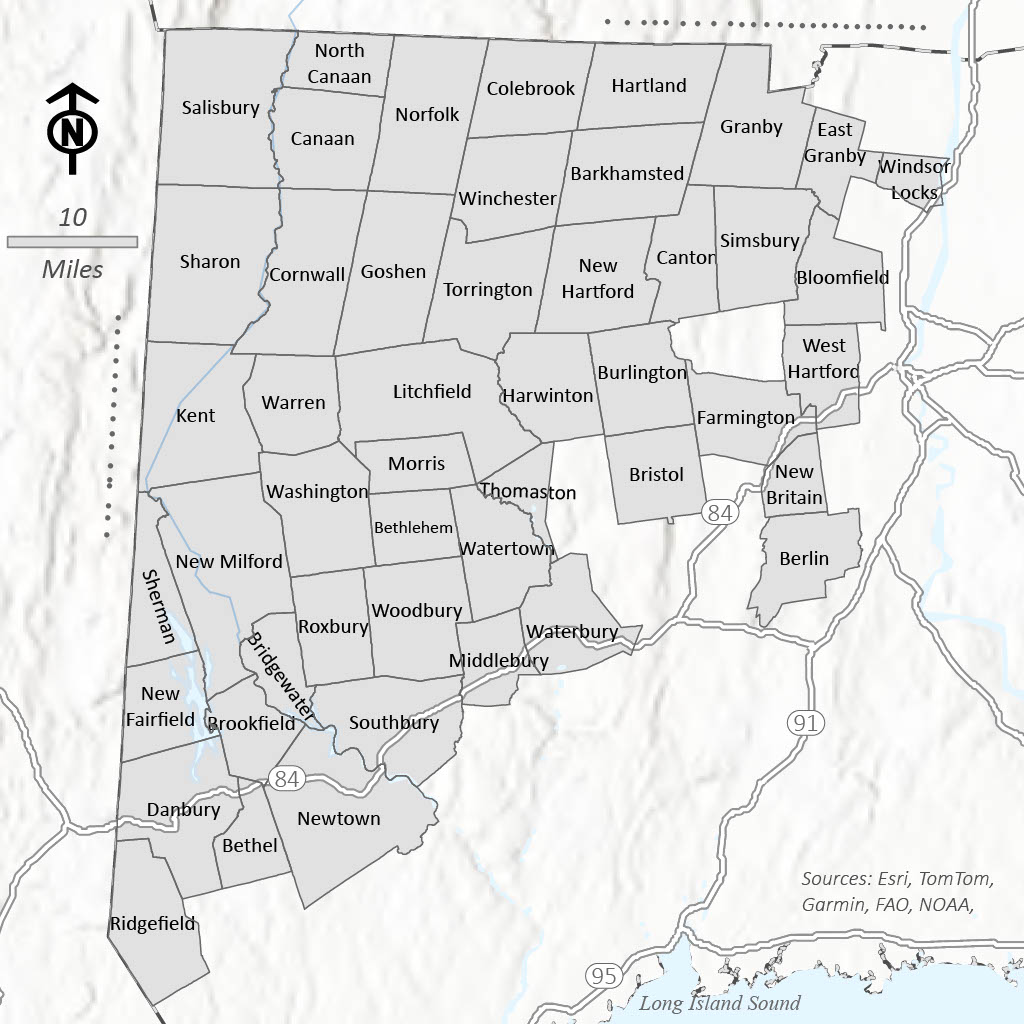
Five Connecticut towns have been added to the federal Highlands Conservation Act region, expanding access to funding for critical open space, habitat and water resource protection initiatives. Berlin, Bloomfield, New Britain, West Hartford and Windsor Locks are now eligible to receive funding from the U.S. Fish and Wildlife Service-administered Highlands Conservation Act grant program, joining 43 other Connecticut communities. The expansion creates new opportunities for municipalities, land trusts and the State of Connecticut to leverage federal funding alongside state and private dollars to conserve important natural resources for people and wildlife.
The Highlands region encompasses more than 3.4 million acres across Connecticut, New York, New Jersey and Pennsylvania. Congress established the Highlands Conservation Act in 2004 to help conserve lands that support clean drinking water, healthy forests, thriving wildlife populations, productive agriculture and recreational opportunities. Since its inception, the program has directed more than $80 million in federal conservation funding from the Land and Water Conservation Fund to the four-state Highlands Region.
To date, Highlands Conservation Act funding has supported 52 projects in Connecticut, conserving more than 9,000 acres and leveraging more than $18.5 million in federal funding. In 2022, Congress reauthorized the Highlands Conservation Act and expanded the geographic area eligible for participation, creating an opportunity for additional communities to access federal conservation funding. Communities must be located within an area identified by the U.S. Fish and Wildlife Service and voluntarily “opt in” to the Highlands region. Requests are then reviewed and approved by the State of Connecticut and the U.S. Fish and Wildlife Service.
The Housatonic Valley Association (HVA), working in collaboration with local and regional land trusts and municipalities, helped add 15 communities to the Connecticut Highlands region in 2024 and 2025. With the addition of these five communities, 20 new Connecticut municipalities have gained eligibility since the expansion of the program. For the five newly eligible communities, HVA worked closely with the Trust for Public Land, Traprock Ridge Land Conservancy and State of Connecticut to inform municipalities about the opportunity, answer questions and support the opt-in process.
“The Connecticut Department of Energy and Environmental Protection [DEEP] is thrilled to see this continued expansion of the Highlands region. Bringing additional federal funding into Connecticut to match existing state open space funding that increases the pace of conservation is a huge win for our municipal and nonprofit partners as well as the residents of the state. Conservation of natural resources and expanded opportunities for public access are priorities for the Agency, so DEEP welcomes any chance to further those initiatives,” says Lindsay Suhr, Co-Chair of the Highlands Steering Committee and Director of the Land Acquisition and Management Office for DEEP.
Highlands Conservation Act funding is often paired with Connecticut’s Open Space and Watershed Land Acquisition Grant Program (OSWA), as well as private and municipal funding, to support community-led conservation projects. For example, a recent 276-acre conservation project in Salisbury, Connecticut, protected forested lands that help maintain clean water in the Twin Lakes and Wild and Scenic Housatonic River. Highlands Conservation Act and OSWA funding, combined with significant private support and the efforts of community members, helped make the project possible.
“Connecticut’s expansion strengthens the Highlands as a truly connected, four-state landscape and gives more communities access to a voluntary tool for protecting the places that make the region special. By supporting local land conservation, the Highlands program can help safeguard clean water, wildlife habitat, outdoor recreation and the healthy, livable communities that will depend on them for generations to come,” said Mark Zakutansky, Co-Chair of the Highlands Steering Committee and the Director of Conservation Policy Engagement for the Appalachian Mountain Club.
The Housatonic Valley Association has long partnered with DEEP to strengthen the Highlands Conservation Act program in Connecticut. HVA works to identify eligible conservation projects, support preparation of funding applications and help land trusts and municipalities understand how Highlands funding can be combined with other public and private resources.
In recognition of this long-standing partnership, HVA was selected by DEEP to serve on the four-state Highlands Steering Committee, a regional public-private partnership, co-chaired by Suhr and Zakutansky, that provides input to the U.S. Fish and Wildlife Service on programmatic components of the Highlands Conservation Act. HVA also leads the Connecticut Highlands Coalition, a partnership of regional organizations working to advance conservation and strengthen implementation of the Highlands Conservation Act throughout Connecticut.
“The expansion of the Highlands region is ultimately about more than adding towns to the map. It’s about giving communities another tool to turn local conservation priorities into action,” says Julia Rogers, HVA’s Conservation Programs Director. “When federal funding can be paired with state, municipal, land trust and private investment, it can help communities protect the forests, streams, wetlands and wildlife corridors that make Connecticut such a special place. We’re excited to help these five communities take advantage of that opportunity and to continue building a connected conservation network across the Connecticut Highlands.”


